
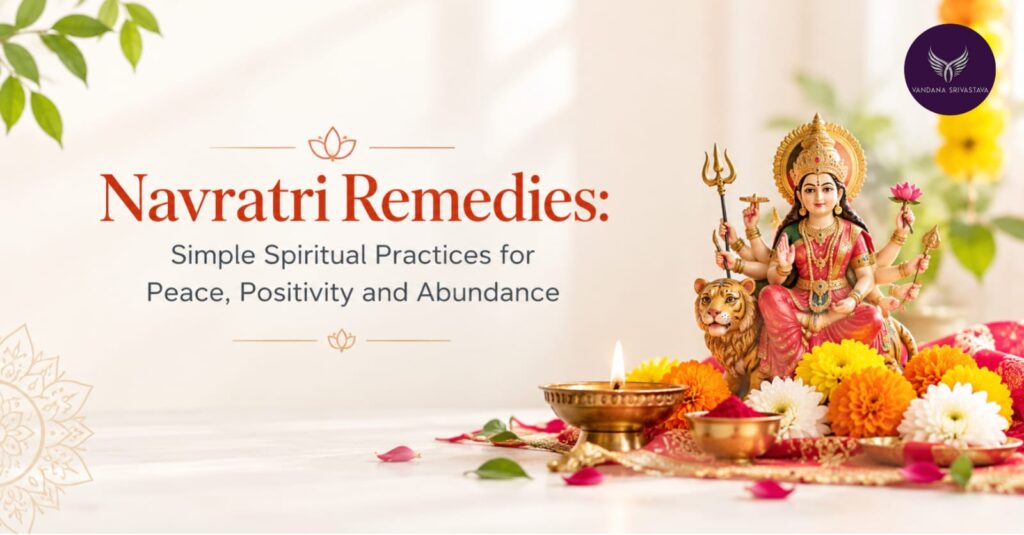
Introduction: Welcome Navratri with a Fresh Perspective
Navratri is one of the most spiritually significant festivals in Indian culture. Dedicated to the nine forms of Maa Durga, these nine days represent strength, devotion, transformation and the victory of good over evil.
For many people, Navratri is a time for prayer, fasting and traditional rituals. But it can also be an opportunity to pause, reflect on life and consciously welcome more peace, positivity and balance into our everyday experiences.
Sometimes, we become so occupied with our responsibilities that we forget to give ourselves time to reconnect with our inner selves. Navratri offers a beautiful opportunity to slow down, release unhelpful habits and focus on what truly matters.
Whether you wish to create a peaceful home, develop a positive mindset or cultivate a healthier relationship with abundance, simple spiritual practices can help make these nine days more meaningful. Let us explore some Navratri remedies and spiritual practices that you can follow at home.
1. Begin Your Day with Prayer and Gratitude
One of the simplest ways to begin Navratri is by setting aside a few quiet minutes for prayer. You do not need an elaborate arrangement or a long ritual. Sit comfortably, offer your prayers to Maa Durga and reflect on the blessings already present in your life.
You can begin by expressing gratitude for your family, health, opportunities, personal growth and the strength to overcome difficult situations.
Try this simple practice:
- Light a diya if it is part of your tradition.
- Offer flowers or water to the Goddess according to your customs.
- Say a prayer with sincerity and devotion.
- Think of three things you are grateful for.
- Set one positive intention for the day.
Gratitude does not mean ignoring life’s challenges. It simply allows you to acknowledge what is going well while finding the strength to work through what is not.
2. Chant a Mantra to Create a Peaceful Mindset
Mantra chanting is an important part of many Navratri traditions. Repeating a sacred mantra can offer a moment of focus, devotion and stillness in an otherwise busy day.
One commonly recited mantra dedicated to Maa Durga is:
“Om Dum Durgayei Namaha.”
You may chant it quietly for a few minutes, according to your faith and personal practice. Choose a peaceful place, sit comfortably and bring your attention back to the mantra whenever your thoughts wander.
The purpose is not to force your mind to become completely silent. It is to give yourself a moment away from constant distractions and reconnect with your intention.
Regular prayer or mantra chanting may support a sense of calm and spiritual connection. Its effects can vary from person to person, and it should be approached as a devotional practice rather than a guaranteed solution to life’s problems.
3. Cleanse Your Home and Create a Positive Environment
During Navratri, many families clean and decorate their homes as a way of preparing for the festival and welcoming the Goddess. Beyond the traditional significance, a clean and organised environment can make everyday living feel more comfortable and peaceful.
Simple steps to try:
- Remove items you no longer need.
- Keep your entrance clean and welcoming.
- Organise your prayer space.
- Open windows when practical to allow fresh air into your home.
- Add fresh flowers or traditional decorations if you enjoy them.
- Keep frequently used areas tidy and comfortable.
These practices can be combined with prayer, meditation or other meaningful household traditions. For those interested in spiritual approaches to their surroundings, Space Energy Correction offers another way to explore the relationship between a space and the experience of living or working in it.
Vandana Srivastava works with Space Energy Correction, which focuses on perceived energy concerns and spatial imbalances. Such spiritual approaches can complement practical steps to create a more organised and welcoming environment.
4. Practise Aura Cleansing as a Form of Spiritual Reflection
Navratri can also be a time to turn your attention inward. We all experience days filled with pressure, disagreements, uncertainty and emotional exhaustion. Sometimes, taking a quiet break and reflecting on our feelings can help us understand what we need to let go of.
In spiritual traditions, aura cleansing is associated with the idea of clearing unwanted or heavy energy. It is a spiritual practice, not a scientifically established method of removing a measurable energy field.
A gentle practice to try:
- Sit quietly in a comfortable place.
- Take several slow, natural breaths.
- Notice how you are feeling without judging yourself.
- Identify one worry, resentment or unhelpful thought you would like to work through.
- Set an intention to respond to yourself and others with greater awareness.
You can also explore guided meditation or spiritual guidance if you would like support in developing a regular practice. Remember, you do not have to feel positive every moment. The aim is to make space for your emotions while choosing how you wish to move forward.
5. Set Intentions for Peace, Prosperity and Abundance
Navratri is often associated with prosperity and blessings. It can also be a meaningful time to reflect on what abundance means to you. For one person, abundance may mean financial stability. For another, it may mean good health, supportive relationships, meaningful work or greater peace of mind.
Rather than focusing only on what you wish to receive, think about the habits and actions that can support your intentions.
- If you want financial stability, review your expenses and make a realistic savings plan.
- If you want better relationships, practise honest communication and healthy boundaries.
- If you want personal growth, dedicate time to learning something new.
- If you want more peace, create space for rest and reflection.
- If you want professional progress, identify one practical step you can take towards your goal.
You may write your intentions in a journal and revisit them throughout the nine days. Spiritual intention-setting can help you clarify what matters to you. Pairing it with consistent action makes it easier to turn those intentions into meaningful goals.
6. Observe Fasting and Rituals According to Your Capacity
Fasting is an important Navratri tradition for many devotees. Some observe a fast throughout the festival, while others follow specific days or particular dietary customs. There is no need to compare your observance with anyone else’s. Your practice should respect your health, circumstances and family traditions.
If you choose to fast, make sure you can do so safely. People with medical conditions, those who are pregnant, and anyone who may be at risk from dietary restrictions should seek appropriate medical advice before fasting.
If fasting is not suitable for you, you can still observe Navratri through prayer, charitable acts, meditation, reading spiritual texts or spending time in reflection. Devotion is not measured by how much discomfort you endure. Sincerity, kindness and mindful participation can also make the festival meaningful.
7. Practise Kindness and Seva During Navratri
Spiritual growth is not limited to what we do during prayer. It is also reflected in how we treat people. Navratri can be an opportunity to practise kindness more consciously, help someone in need or contribute to your community.
- Offer food to someone who needs it.
- Support a charitable cause.
- Help an elderly neighbour.
- Make time to listen to someone who is struggling.
- Practise patience with family members and approach disagreements with greater understanding.
These small actions bring spiritual values into everyday life. Peace and positivity are not only things we hope to receive. They are also qualities we can choose to nurture through our own behaviour.
8. Reflect on the Nine Forms of Maa Durga
Each of the nine days of Navratri is traditionally associated with a form of Maa Durga. Devotees may worship these forms according to their family and regional customs. You can also use the nine days as a personal reflection journey, connecting the festival’s symbolism with qualities you would like to develop.
- Courage
- Patience
- Discipline
- Compassion
- Self-belief
- Gratitude
- Clarity
- Resilience
- Renewal
These themes are reflective prompts rather than fixed meanings assigned to each Goddess. At the end of every day, ask yourself: What did I learn about myself today? Where could I have responded with more patience? What am I ready to release or change? What is one positive action I can take tomorrow?
By the end of Navratri, you may have a clearer understanding of the habits and intentions you wish to carry into the months ahead.
9. Make Space for Meditation and Inner Stillness
In the middle of busy schedules, festive preparations and family responsibilities, it can be difficult to find a moment for yourself. Even five to ten minutes of quiet reflection can give you an opportunity to step away from distractions.
- Sit comfortably and focus on your breathing.
- Repeat a prayer or follow a guided meditation.
- Allow thoughts to come and go without fighting them.
- Gently bring your attention back to the present moment.
Meditation is not about achieving a perfect state of mind. It is about practising awareness and giving yourself time to pause. For people interested in spiritual growth, this can become a valuable part of their Navratri routine.
How Vandana Srivastava Can Support Your Spiritual Journey
Vandana Srivastava is an International Cosmic Healer and Manifestation Coach based in Pune. Her work includes spiritual guidance and practices such as Energy Healing, Dowsing, Aura Cleansing, Chakra Balancing and Space Energy Correction.
For those interested in exploring these approaches, her work offers an opportunity to reflect on personal intentions, spiritual well-being and the environment in which they live or work.
These practices can be explored alongside everyday steps such as maintaining healthy routines, improving communication, organising your surroundings and taking practical action towards personal goals.
Spiritual practices are not guaranteed to bring financial prosperity or resolve every personal challenge. Their meaning and experience can differ for each individual. The most important thing is to choose practices that align with your beliefs and help you approach life with greater awareness and intention.
Conclusion: Let Navratri Become a Fresh Beginning
Navratri is more than a festival of rituals and celebrations. For many people, it is a reminder of the strength, devotion and resilience that can help us navigate life’s challenges.
You do not need to follow complicated remedies to make these nine days meaningful. Begin with a clean and welcoming space, a few moments of prayer, an attitude of gratitude and a commitment to one positive change.
Make time for reflection. Practise kindness. Set realistic intentions. And remember that personal growth often happens through small choices repeated consistently.
As you celebrate Navratri, let the light of the festival remind you to nurture peace within yourself, bring care into your surroundings and take thoughtful steps towards the life you wish to create.
May these nine days inspire greater peace, positivity, gratitude and meaningful abundance in your life.
Frequently Asked Questions (FAQs)
1. What are the best Navratri remedies for positivity?
You can begin with prayer, mantra chanting, gratitude journaling, keeping your home clean, meditation and acts of kindness. Choose practices that align with your faith and daily routine.
2. Which mantra can I chant during Navratri?
One commonly recited mantra is “Om Dum Durgayei Namaha.” You may chant it with devotion and focus, following your personal or family tradition.
3. How can I invite positive energy into my home during Navratri?
Start by decluttering, cleaning your living areas, keeping your entrance welcoming and creating a peaceful prayer space. You may also include traditional rituals that are meaningful to your family.
4. What is aura cleansing, and why do people practise it during Navratri?
Aura cleansing is a spiritual practice associated with releasing unwanted or heavy energy. Some people use it as an opportunity for reflection and renewal. It is not a scientifically established method for removing a measurable energy field.
5. Can Navratri rituals help attract abundance?
For many devotees, Navratri is a time to pray for blessings and prosperity. Intention-setting can also help clarify personal goals. Pair spiritual practices with practical steps such as financial planning, skill development and responsible decision-making.
6. What is Space Energy Correction?
Space Energy Correction is a spiritual approach focused on perceived energy concerns and spatial imbalances in homes or workplaces. It can be explored alongside practical measures such as cleaning, decluttering and improving the comfort of a space.
7. Who is Vandana Srivastava?
Vandana Srivastava is an International Cosmic Healer and Manifestation Coach based in Pune. Her work includes Energy Healing, Dowsing, Aura Cleansing, Chakra Balancing, Space Energy Correction and spiritual guidance.