
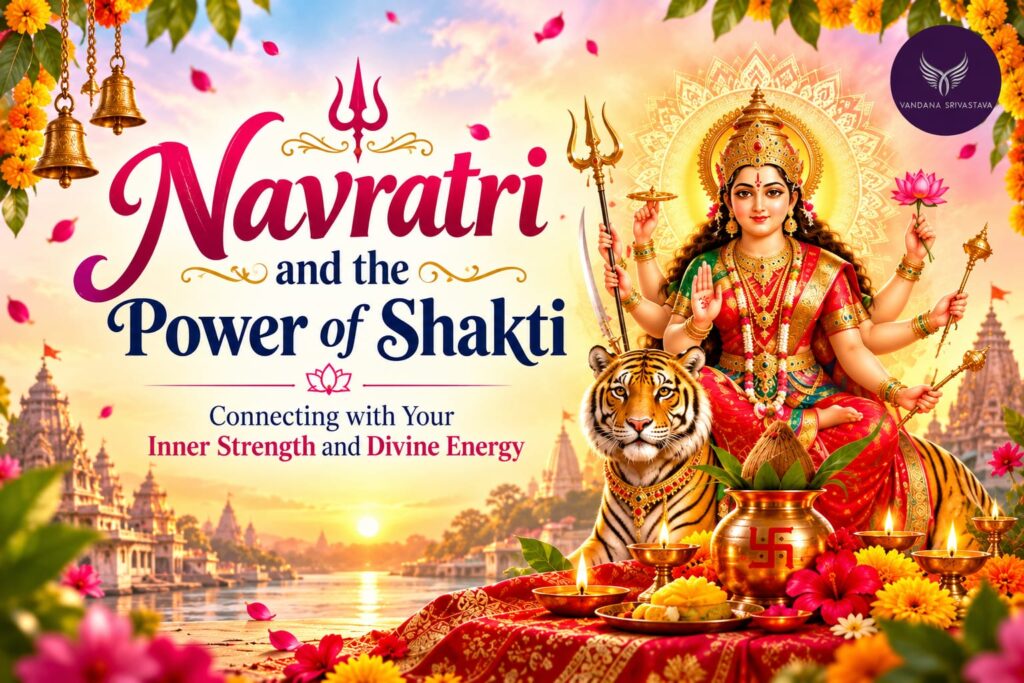
Introduction: Discover the Strength That Already Exists Within You
Have you ever gone through a difficult phase and surprised yourself with how strong you were? Perhaps you handled a challenge you never expected to face, stood up for yourself when it felt uncomfortable, or found the courage to begin again after a setback.
Sometimes, we underestimate our own strength until life gives us a reason to discover it.
In Hindu tradition, this inner power is beautifully reflected in the concept of Shakti – the divine feminine energy associated with strength, creation, transformation and life itself.
Navratri, dedicated to the nine forms of Maa Durga, is a meaningful time to reflect on this energy. The festival reminds devotees of the power of the Goddess and the importance of courage, devotion, resilience and the victory of good over evil.
But the message of Shakti can also inspire us in our everyday lives. It invites us to recognise our abilities, face challenges with greater awareness and reconnect with the strength that may sometimes feel hidden beneath fear, doubt or uncertainty.
This Navratri, let us explore what Shakti means, how its symbolism connects with inner strength and how simple spiritual practices can make the nine days more meaningful.
What Is Shakti? Understanding the Meaning of Divine Energy
The word Shakti comes from Sanskrit and is commonly understood as power, strength or energy. In Hindu philosophy, Shakti represents the divine feminine principle and the dynamic power through which creation, movement and transformation take place.
Shakti is worshipped in many forms, including Maa Durga, Maa Lakshmi and Maa Saraswati. Each Goddess is associated with different qualities and aspects of life.
Why Is Navratri Associated with the Power of Shakti?
Navratri means “nine nights” and is celebrated in honour of the Divine Mother in her various forms. The specific customs and stories associated with the festival can vary across regions and traditions.
One of its central themes is the victory of good over evil, symbolised by the triumph of Goddess Durga over Mahishasura.
This story is often understood as a reminder that courage, righteousness and divine power can overcome destructive forces.
On a personal level, it can encourage us to reflect on the challenges we face within ourselves. Fear, self-doubt, resentment and limiting habits can sometimes prevent us from moving forward. Recognising these patterns is the first step towards responding to them differently.
Navratri gives us an opportunity to pause and ask ourselves:
- Where do I need more courage in my life?
- Which habits or beliefs are holding me back?
- Am I giving myself the same care and respect that I offer others?
- What positive change am I ready to make?
These questions can help transform the festival from a series of rituals into a period of personal reflection and spiritual growth.
5 Ways to Connect with Your Inner Shakti During Navratri
Connecting with your inner strength does not require complicated rituals. Small, consistent practices can help you become more aware of your thoughts, intentions and choices.
1. Begin Your Day with Prayer and Devotion
Prayer can create a meaningful pause in the middle of a busy routine. During Navratri, you may begin your morning by offering prayers to Maa Durga and reflecting on the qualities you wish to develop.
You could pray for courage during a difficult phase, patience in your relationships or clarity while making an important decision.
If it is part of your tradition, light a diya, offer flowers or chant a mantra with devotion.
The purpose is not to ask for a life without challenges. It is to seek the strength and wisdom to navigate those challenges thoughtfully.
2. Practise Meditation to Reconnect with Yourself
Sometimes, our inner strength becomes difficult to recognise because our minds are occupied with responsibilities, expectations and worries.
Meditation offers an opportunity to slow down and observe what is happening within us.
Try sitting quietly for five to ten minutes. Focus on your natural breathing and gently bring your attention back whenever your mind wanders.
You can also reflect on a simple intention, such as:
“I will meet today’s challenges with courage, clarity and compassion.”
Meditation is not about eliminating every negative thought. It is about learning to notice your thoughts without letting every thought dictate your actions.
With regular practice, some people find it easier to create space between an emotion and their response.
3. Replace Self-Doubt with Self-Awareness
Inner strength does not mean never feeling afraid or uncertain. Even confident people experience moments of doubt.
The difference often lies in how we respond to those feelings.
Instead of telling yourself, “I cannot do this,” try asking, “What is one small step I can take?” Instead of thinking, “I always make mistakes,” reflect on what a particular experience can teach you.
These changes do not require you to pretend that everything is easy. They simply help you approach difficulties with a more constructive perspective.
During Navratri, take a few minutes each evening to recognise one challenge you handled, one lesson you learned and one thing you appreciate about yourself.
Over time, this practice can help you develop a more balanced understanding of your abilities.
4. Set Intentions for Personal and Spiritual Growth
Shakti represents power and transformation. Navratri can therefore be a meaningful time to identify the changes you want to make in your life.
Your intention might be to establish healthier boundaries, become more disciplined, improve a relationship, pursue a professional goal or make time for your spiritual practice.
Write down one intention and identify a practical action that supports it.
- For courage: Have a conversation you have been avoiding.
- For peace: Set aside time to rest and reflect.
- For self-respect: Practise saying no when necessary.
- For growth: Dedicate time to learning a new skill.
- For compassion: Respond to yourself with the same understanding you offer a friend.
Spiritual intention-setting can help you clarify your priorities. Pairing intentions with action allows you to participate actively in your own growth.
5. Create a Peaceful Space for Spiritual Practice
The environment around us can influence how comfortable and focused we feel. A cluttered or noisy space may make it harder to find a quiet moment, while an organised corner can provide a sense of calm.
During Navratri, you might create a small prayer or meditation space in your home.
Keep it clean, add flowers or a diya if appropriate, and choose a place where you can sit without frequent interruptions.
You can also make time to organise your surroundings, open windows when practical and remove items you no longer need.
For those who follow spiritual approaches to their environment, Space Energy Correction is another area to explore. It focuses on perceived energy concerns and spatial imbalances in homes or workplaces.
Vandana Srivastava works with Space Energy Correction which helps negative energy to finish as part of her spiritual services. Such approaches can be explored alongside practical steps to create a more comfortable, organised and welcoming space.
Shakti in Everyday Life: Strength Is Not Always Loud
When we think of strength, we often imagine someone who never cries, never struggles and always knows what to do. But real-life strength can look very different.
It can be a woman choosing to start again after disappointment. It can be a person asking for help instead of pretending to manage everything alone. It can be a parent practising patience, a professional speaking up respectfully or someone deciding to leave an unhealthy pattern behind.
Sometimes, strength means taking action. At other times, it means resting, reflecting and recognising that you cannot control every situation.
The symbolism of Maa Durga can inspire courage, while the broader idea of Shakti reminds us that power can be expressed through compassion, wisdom, creativity and resilience.
Connecting with your inner strength does not mean carrying every burden by yourself. It means learning to recognise your needs, make thoughtful choices and seek support when necessary.
Understanding Divine Feminine Energy
The idea of divine feminine energy is meaningful in many spiritual discussions. It is often associated with nurturing, intuition, creativity, compassion and transformation.
However, these qualities are not limited to women. Anyone can cultivate courage, care, wisdom, creativity and emotional awareness.
The symbolism of Shakti can encourage us to bring these qualities into balance rather than viewing strength and gentleness as opposites.
You can be compassionate and still maintain boundaries. You can be ambitious and still make time for rest. You can be emotionally sensitive and still make courageous decisions.
The spiritual significance of Shakti lies, for many devotees, in recognising the sacredness of life and the power of transformation.
How Vandana Srivastava Can Support Your Spiritual Journey
Vandana Srivastava is an International Cosmic Healer and Manifestation Coach based in Pune. Her work includes spiritual guidance and practices such as Energy Healing, Dowsing, Aura Cleansing, Chakra Balancing and Space Energy Correction.
For individuals interested in exploring spiritual wellness, these practices may offer a structured opportunity for reflection, intention-setting and personal exploration.
During Navratri, you may wish to reflect on the areas of life where you want greater clarity, balance or a stronger connection with your spiritual beliefs.
Spiritual practices can complement everyday steps such as building healthy routines, communicating clearly, setting realistic goals and seeking professional support when needed. They should not be viewed as guaranteed solutions to health, financial or personal difficulties.
The most meaningful spiritual journey is one that encourages greater self-awareness while helping you engage thoughtfully with everyday life.
Conclusion: Let This Navratri Awaken Your Inner Strength
Navratri reminds us of the power of the Divine Mother and the victory of good over evil. The concept of Shakti offers an opportunity to reflect on courage, wisdom, compassion and the capacity for transformation.
You do not have to make dramatic changes in nine days. Begin with a prayer, spend a few minutes in reflection, identify one limiting habit and take one practical step towards the person you wish to become.
Let this Navratri be a reminder that strength does not mean having every answer. Sometimes, it means trusting yourself enough to take the next step, asking for help when you need it and continuing to grow through life’s experiences.
May the power of Shakti inspire you to live with courage, clarity, compassion and a deeper connection with your inner self.
Frequently Asked Questions (FAQs)
1. What does Shakti mean in Hinduism?
Shakti is commonly understood as divine power or energy. In Hindu traditions, it represents the divine feminine principle associated with creation, transformation and dynamic power.
2. Why is Navratri associated with Shakti?
Navratri honours the Divine Mother in her various forms. The festival celebrates divine strength and the victory of good over evil, with Goddess Durga serving as a central symbol of courage and protection.
3. How can I connect with my inner strength during Navratri?
You can use the nine days for prayer, meditation, gratitude, journaling and setting practical intentions. Reflecting on your challenges and taking small, meaningful actions can also help you recognise your strengths.
4. What are simple spiritual practices to follow during Navratri?
Common practices include prayer, mantra chanting, meditation, fasting according to your capacity, charitable acts and reflecting on the teachings associated with the Goddess.
5. What is divine feminine energy?
Divine feminine energy is a spiritual concept associated with qualities such as nurturing, creativity, intuition, compassion and transformation. These qualities can be cultivated by people of any gender.
6. Can meditation help me develop inner strength?
Meditation can help some people become more aware of their thoughts and emotions. It may support calm and reflection, although individual experiences vary and it is not a substitute for professional care when needed.
7. Who is Vandana Srivastava?
Vandana Srivastava is an International Cosmic Healer and Manifestation Coach based in Pune. Her services include Energy Healing, Dowsing, Aura Cleansing, Chakra Balancing, Space Energy Correction and spiritual guidance.